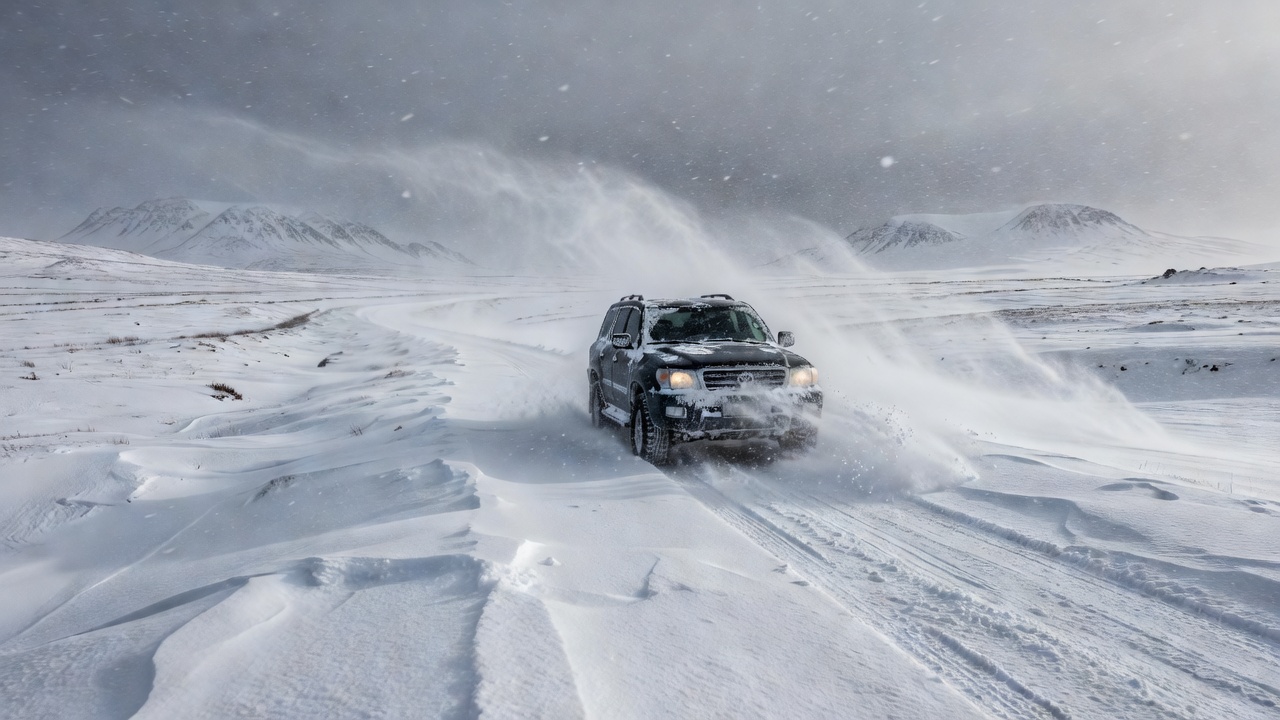
Driving the Icelandic Ring Road in the winter is an awe-inspiring experience characterized by snow-blanketed volcanic craters and dancing Northern Lights. However, it is not for the faint of heart. The weather conditions can change in a matter of minutes, transitioning from bright winter sunshine to a blinding whiteout blizzard.
Vehicle Preparation and Studded Tires
First and foremost, a 4x4 vehicle is highly recommended—and arguably mandatory—for winter travel along Route 1. While the main road is plowed regularly, blowing snow can quickly accumulate. When renting your vehicle, explicitly ensure it is fitted with studded winter tires (leyfðir nagladekk). These metal studs provide crucial traction on black ice, which frequently coats the tarmac near coastal sections.
Limited Daylight Management
During the depths of December and January, Iceland receives only around 4 to 5 hours of functional daylight. You must plan your driving schedule meticulously. It is standard practice to do your highway driving in the dark early morning, ensuring you arrive at your destination or hiking trail just as the sun begins to rise around 10:30 AM.
Wind: The Invisible Hazard
Snow is obvious, but the Icelandic wind is a silent hazard that catches many tourists off guard. Gale-force winds can easily blow a vehicle off the road or rip a car door right off its hinges when opened carelessly. Always park facing the wind, and hold your door with both hands when exiting the vehicle.
The Holy Grail of Iceland Driving
Before putting the key in the ignition each morning, you must check the official road conditions map at umferdin.is. It provides real-time, color-coded updates on road closures, ice accumulation, and wind speeds across the entire country.